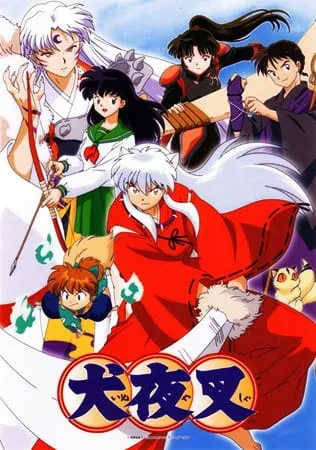
If you're looking for an anime like Inuyasha, based on fan votes, the best starting pick is Kamisama Kiss.
Ready to jump back through the Bone Eater's Well for another supernatural adventure?
Fans love Inuyasha for its blend of feudal mythology, slow-burn romance, and high-stakes demon hunting. Usually, viewers crave that specific vibe of a modern protagonist navigating a dangerous spirit world alongside a traveling party. Please upvote your favorites below, but only if you've seen both shows to help the community!
Core Themes in Inuyasha
Feudal Era Mythology
Reincarnation and Fate
Supernatural Romance
Power System Explained
Combat revolves around spiritual energy (Reiki) and demonic power (Yoki). Characters use enchanted weaponry like the Tetsusaiga or spiritual tools like sacred arrows and sutras. Battles often hinge on mastering specific techniques or upgrading weapons rather than complex mathematical systems. It's grounded in Japanese folklore, emphasizing the clash between purity and corruption through ancestral artifacts and innate spiritual strength.
A homeless high school girl becomes a land god and gains a stubborn fox familiar. It's the gold standard for supernatural romance.
Why it's similar: It perfectly captures the 'modern girl meets grumpy supernatural protector' dynamic. Like Kagome and Inuyasha, Nanami and Tomoe navigate a world of Japanese folklore while their relationship slowly evolves through shared trials.
Power comparison: Focuses more on divine authority and contracts rather than swordplay, but features similar Shinto-inspired spirit battles.
Why watch after Inuyasha: Watch this if you loved the romantic tension and the Shinto-shrine aesthetic of Inuyasha.
A sheltered princess is betrayed and forced to flee her kingdom with her bodyguard to find legendary warriors. This is a top-tier fantasy adventure.
Why it's similar: It mirrors the 'traveling party' structure where a group of unique individuals searches for powerful artifacts/beings to save their world. Yona's growth from a naive girl to a capable leader feels very much like Kagome’s development.
Power comparison: Uses dragon-based ancestral powers and martial arts rather than demonic energy, though the historical combat feel is nearly identical.
Why watch after Inuyasha: Perfect for fans who enjoyed the group dynamic and the journey across a mythic landscape.
Start with the original 167-episode series, then watch 'Inuyasha: The Final Act' to see the manga's conclusion. The four movies can be watched after episode 95, and the sequel series 'Yashahime' follows the original ending.
Is Inuyasha: The Final Act canon?
Yes, 'The Final Act' is completely canon and adapts the final 20 volumes of the manga. It was produced years later to provide the definitive ending that the original 2000-2004 anime run missed.
Does Kagome end up with Inuyasha?
Yes, after the defeat of Naraku and the disappearance of the Shikon Jewel, Kagome eventually returns to the Feudal Era. They marry and live together in the past, a conclusion solidified in both the manga and 'The Final Act'.
How much filler is in the original Inuyasha anime?
Roughly 20% of the original series is filler. Major filler arcs include the 'Aion' segments and various standalone demon-of-the-week episodes. Most fans recommend skipping them to maintain the pacing of the Shikon Jewel quest.
Two friends are pulled into an ancient book where they become priestesses of rival gods. It’s a classic 90s portal fantasy with high stakes.
Why it's similar: This is the closest match for the 'Isekai to a dangerous historical world' trope. It features a central priestess figure who must gather protectors, echoing the Shikon Jewel shards and the quest to defeat a central evil.
Power comparison: Powers are granted by celestial gods, mimicking the spiritual 'purification' abilities Kagome uses against demons.
Why watch after Inuyasha: If you miss the specific 90s art style and the dramatic, high-consequence romance of Inuyasha, this is it.
Two 'barrier masters' protect their school, which sits on a site that draws powerful demons. It’s a fantastic supernatural action series.
Why it's similar: It shares the specific focus on Japanese demon hunting and the heavy responsibility placed on teenage shoulders. The chemistry between the two leads provides a similar bickering-but-loyal relationship found in the source series.
Power comparison: Combat is much more tactical, focusing on spatial barriers rather than brute force sword swings.
Why watch after Inuyasha: Watch this if you preferred the demon-of-the-week format and the spiritual lore aspects of Inuyasha.
A boy travels a demon-infested landscape to find a cure for his sister. It is the modern peak of historical supernatural action.
Why it's similar: It delivers that same 'Taisho/Sengoku' period atmosphere where demons lurk in every shadow. The focus on specialized weapons designed to slay supernatural threats will feel immediately familiar to fans of the Tetsusaiga.
Power comparison: Uses elemental Breathing Styles which feel like more modernized, flashy versions of Inuyasha’s specific sword techniques.
Why watch after Inuyasha: Choose this for a higher budget, action-packed version of the demon-slaying themes found in Inuyasha.
A girl is transported to a world where she becomes central to a war involving mecha-like dragons and destiny. It’s an epic historical fantasy.
Why it's similar: It blends the 'girl from another world' trope with high-fantasy politics and a deep, fated romance. Like Kagome, Hitomi possesses unique sight that is vital to the survival of her new companions.
Power comparison: Swaps demons for medieval-style mechs, but the sword-and-sorcery core remains consistent.
Why watch after Inuyasha: Ideal for fans who want another grand, sweeping epic that mixes romance with heavy fantasy world-building.