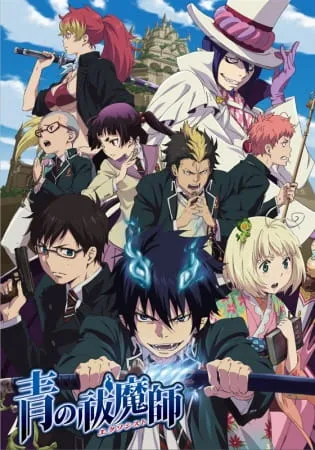
Loved Blue Exorcist? Top 6 Picks for Demon Slaying Fans
Anime Similar to Blue Exorcist
If you need an anime like blue exorcist based on fan votes, the best starting pick is Soul Eater.
What happens when the literal son of Satan decides to become a priest and kill his own father?
Fans love Blue Exorcist for Rin’s internal struggle against his demonic lineage and the cozy-yet-dangerous atmosphere of True Cross Academy. You’re likely looking for shows that blend supernatural school life with high-stakes exorcism. Please upvote your favorite matches below, but only if you have finished both series.
Core Themes in Blue Exorcist
Protagonists fighting their own dark nature
Supernatural boarding school settings
Brotherhood and family trauma
Power System Explained
The combat in Blue Exorcist revolves around the 'Masho'—a spiritual wound that allows humans to see demons. Exorcists specialize in distinct classes like Knights (swordsmen), Dragoons (guns), Tamers (summons), Arias (holy chants), and Doctors. Rin Okumura specifically channels destructive blue flames inherited from Satan through his demon-slaying sword, the Kurikara. Success in battle requires a mix of inherited demonic traits and rigorous academic mastery of holy tools.
Students at a specialized academy hunt corrupted souls to turn their partners into powerful Death Scythes.
Why it's similar: This is the closest match because it perfectly captures the 'supernatural high school' vibe where students train to hunt monsters. The chemistry between the main duo mirrors Rin and Yukio’s complex relationship dynamics.
Power comparison: Instead of blue flames, combat here relies on the resonance between a 'Meister' and their living weapon partner.
Why watch after Blue Exorcist: Watch this if you loved the classroom setting and the gothic, stylized world-building of True Cross Academy.
A kind-hearted teenager swallows a cursed finger to save his friends, becoming the vessel for a legendary demon.
Why it's similar: The core premise is identical: a protagonist who is technically a monster must work for a secret organization to kill other monsters. It’s a more modern, darker take on the 'exorcist in training' trope.
Power comparison: Both series use spiritual energy (Cursed Energy vs. Blue Flames) to fuel unique physical and magical abilities.
Why watch after Blue Exorcist: If you wanted Blue Exorcist to be faster-paced and have higher-stakes animation, this is your next binge.
What is the correct watch order for Blue Exorcist?
Watch Season 1 through Episode 17, then skip to Season 2 (Kyoto Saga). Episodes 18-25 of Season 1 are anime-original and non-canon. Follow this with Season 3 (Shimane Illuminati Saga) and Season 4 (Beyond the Snow Saga).
Is Blue Exorcist Season 1 canon to the manga?
Only the first 17 episodes of Season 1 follow the manga. The final arc involving the 'Satanic Gate' was an original ending created because the manga was still ongoing. Season 2 ignores these events and resumes the manga storyline.
Will there be a Blue Exorcist Season 4?
Yes, Season 4 (Blue Exorcist: Beyond the Snow Saga) began airing in October 2024. This season continues the story directly from the Shimane Illuminati arc, covering the winter-themed events from the manga's middle chapters.
Does Blue Exorcist have any romance?
There is a subtle romantic subplot involving Rin, Shiemi, and Yukio. While the show focuses primarily on action and brotherhood, Shiemi's growing feelings for Rin and the resulting tension are recurring themes throughout the True Cross Academy arcs.
After a virus wipes out adults, vampires enslave humanity until a group of rebels fights back with demon-possessed weapons.
Why it's similar: It features a hot-headed lead who uses the power of a demon to protect his found family. The dynamic of a military-style school training kids to fight supernatural threats feels very familiar.
Power comparison: Characters use 'Cursed Gear'—weapons housing demons—which functions similarly to Rin’s demon-slaying Koma Sword.
Why watch after Blue Exorcist: This is perfect for fans who enjoyed the 'humanity vs. monsters' war aspect and the heavy focus on brotherly bonds.
Exorcists use a holy substance called Innocence to destroy Akuma, souls trapped in mechanical bodies by the Earl.
Why it's similar: This is a classic exorcist story that leans heavily into religious iconography and tragic monster origins. Like Rin, Allen Walker has a physical 'curse' that grants him the power to see and kill demons.
Power comparison: The combat is more varied, focusing on biological and weaponized 'Innocence' rather than just elemental flames.
Why watch after Blue Exorcist: Pick this if you want a longer, more epic journey that explores the darker philosophical side of being an exorcist.
A minor god looking for fame teams up with a girl who can't stay in her body and a lost soul serving as his weapon.
Why it's similar: It captures the urban fantasy feel where demons (Phantoms) hide in plain sight among humans. It balances comedic school moments with genuinely high-stakes supernatural battles.
Power comparison: Combat involves gods using 'Regalia' (spirits turned weapons), which mirrors the familiar-summoning aspect of Tamer classes.
Why watch after Blue Exorcist: You should watch this if you loved the mix of humor and heart that Rin brings to his interactions with classmates.
Two rival young exorcists are prophesied to marry and give birth to the ultimate warrior who will end a centuries-long war.
Why it's similar: The story focuses entirely on the training and societal pressure of being a top-tier exorcist. It features a similar 'other world' (Magano) where demons reside, paralleling the Gehenna/Assiah divide.
Power comparison: Combat utilizes charms and enchanted gear, focusing more on spiritual rituals than raw demonic fire.
Why watch after Blue Exorcist: Choose this if you specifically enjoyed the exorcism rituals and the concept of specialized demon-slaying clans.