Anime Like Bleach: Top 6 List (Soul Reapers & Swords)
Anime Similar to Bleach
Looking for anime like Bleach? Based on fan votes, your best starting pick is Jujutsu Kaisen.
Ready to trade your school bag for a Zanpakuto and protect the living world?
Fans love Bleach for its iconic character designs, escalating power levels, and the 'hidden world' concept. If you crave intense sword fights and supernatural lore, these matches deliver that same high-stakes energy. Upvote your favorites below, but please only vote if you have watched both series.
Core Themes in Bleach
Supernatural Law Enforcement
Spiritual Evolution
Sword-based Combat
Power System Explained
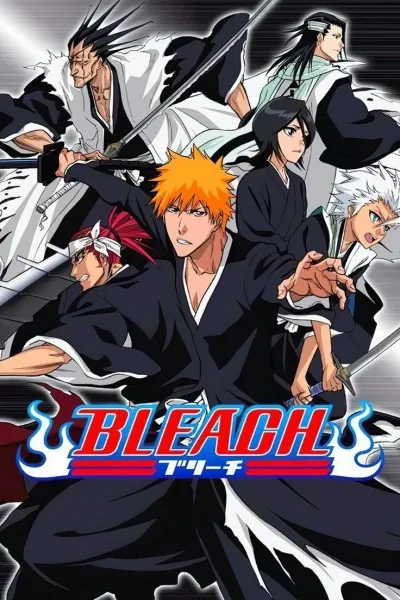
Bleach centers on spiritual energy called Reiatsu. Warriors manifest this power through Zanpakuto—swords containing sentient spirits. Combat revolves around two release stages: Shikai, which transforms the blade's form, and Bankai, the ultimate manifestation of the user's power. Beyond swordplay, characters utilize Kidō (spiritual spells) and Flash Step for high-speed maneuvering. It is a system built on internal growth, lineage, and massive bursts of spiritual pressure that can overwhelm opponents physically.
High-schoolers join a secret organization to fight 'Curses' born from human negative emotions. It's the modern spiritual successor to Bleach's urban fantasy vibe.
Why it's similar: Both series feature a protagonist who suddenly gains powers and is drafted into a rigid, supernatural military-style hierarchy. They share a gritty aesthetic and focus on 'cleansing' monsters that haunt the human world.
Power comparison: Jujutsu Kaisen uses 'Cursed Energy' and 'Domain Expansions,' which function similarly to Bleach’s Bankai as a final, terrain-altering trump card.
Why watch after Bleach: Watch this if you want Bleach's dark atmosphere but with modern, high-budget animation and faster pacing.
A teenage delinquent becomes a Spirit Detective after a fatal accident, hunting demons in the human realm. This is a classic 90s staple for fans of spiritual combat.
Why it's similar: This series pioneered the 'Spirit World' bureaucracy that Bleach eventually refined. It focuses heavily on the balance between the living world and the afterlife, featuring legendary tournament arcs.
Power comparison: Characters use spiritual energy (Reiki) to create physical weapons or projectiles, much like the energy-based attacks seen in early Bleach arcs.
Why watch after Bleach: If you enjoy the 'Spirit Detective' aspect of early Bleach episodes, this is the definitive ancestor of that genre.
What is the correct watch order for Bleach including the new season?
Watch episodes 1-366 of the original series first, then proceed to Bleach: Thousand-Year Blood War. For the most coherent experience, follow the manga's canon timeline and skip the non-canon filler seasons like the Bount or Zanpakuto Unknown Tales arcs.
Can I skip the filler episodes in Bleach without missing the plot?
Yes, you can skip filler without losing the main narrative. Bleach is roughly 45% filler. Skipping arcs like the Bount (64-108) and the New Captain (168-189) is highly recommended for newcomers to maintain the story's original momentum and pacing.
Is there any romance in Bleach between the main characters?
Romance is a subplot rather than the main focus. While Ichigo shares deep bonds with Rukia and Orihime, the series prioritizes action. The final manga chapters and the Thousand-Year Blood War epilogue do provide definitive answers regarding the characters' romantic futures.
Is the Thousand-Year Blood War the final arc of the anime?
Yes, the Thousand-Year Blood War is the final major arc of the original manga by Tite Kubo. The new anime adaptation covers this final conflict between the Soul Reapers and the Quincy, concluding the story started in 2004.
Students at a specialized academy hunt souls to transform their living weapon partners into 'Death Scythes.' It is a stylish, weapon-centric shonen with a gothic twist.
Why it's similar: The core dynamic relies on the bond between a meister and their weapon, mirroring the relationship between a Soul Reaper and their Zanpakuto spirit. Both shows emphasize the 'soul' as a source of combat power.
Power comparison: Combat is purely weapon-focused, where 'Soul Resonance' provides power boosts similar to how Ichigo synchronizes with Zangetsu.
Why watch after Bleach: Pick this if you love the diverse, creative weapon transformations and the eccentric cast of the Gotei 13.
A young man joins an elite corps of swordsmen to hunt demons and find a cure for his sister. It features some of the best sword choreography in modern anime.
Why it's similar: It mirrors the 'Gotei 13' structure through its 'Hashira' (Pillars), who are elite elemental swordsmen with distinct personalities. The focus on breathing techniques is very similar to elemental Zanpakuto releases.
Power comparison: Instead of spiritual pressure, fighters use elemental 'Breathing Styles' to execute spectacular sword techniques that visually resemble Bleach's elemental Shikai.
Why watch after Bleach: Watch this for the top-tier animation and the sense of belonging to an elite group of specialized warriors.
Exorcists use a holy substance called Innocence to destroy Akuma, demons created from human sorrow. It’s a dark, gothic journey with deep lore.
Why it's similar: The Black Order is a direct parallel to the Soul Society, acting as a worldwide organization with specific divisions and uniforms. It handles themes of grief and the burden of being a 'reaper' for lost souls.
Power comparison: Exorcists use 'Innocence' to manifest unique weapons that evolve through different 'synchronized' levels, much like the progression from Shikai to Bankai.
Why watch after Bleach: This is perfect if you want a more emotional, darker take on the 'war between spirits and humans' theme.
In a world where magic is everything, a boy with zero magic uses anti-magic swords to climb the ranks of the Magic Knights. It is a high-energy battle shonen.
Why it's similar: It captures the 'Squad' culture perfectly, with different captains and squads competing for prestige. The protagonist's 'inner demon' struggle is a clear nod to Ichigo's battle with his inner Hollow.
Power comparison: The protagonist uses massive swords that negate magic, while others use grimoires for elemental spells that feel like Kidō mastery.
Why watch after Bleach: Choose this for the high-octane battle energy and the 'zero-to-hero' progression within a military ranking system.