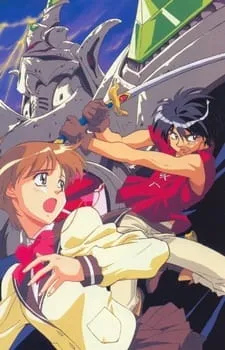
Loved The Vision of Escaflowne? Top 6 Picks for Mecha Fans
Anime Similar to The Vision of Escaflowne
Looking for anime like The Vision of Escaflowne? Based on fan votes, the best starting pick is Magic Knight Rayearth.
Ever feel like destiny is pulling you toward a world where giant robots run on dragon hearts?
Fans love Escaflowne for its rare blend of shoujo romance, high-stakes political intrigue, and gorgeous hand-drawn mecha. You're likely looking for that same cross-genre magic where fantasy and technology collide. Upvote your favorite matches below, but please only vote if you've seen both shows to keep things accurate.
Core Themes in The Vision of Escaflowne
Steampunk Mecha Warfare
Fate and Divination
Cross-World Romance
Power System Explained
Combat centers on Guymelefs, massive mechanical suits powered by 'Energist' stones harvested from dragons. Pilots share a sensory link with their mechs, meaning they feel the pain of every blow sustained in battle. Beyond the steel, the 'Power of Wishes' and Hitomi’s tarot-based premonitions act as a supernatural force, where a person’s sheer will or destiny can physically reshape the battlefield and the future of Gaea itself.
Three girls are summoned to the world of Cefiro to become Legendary Magic Knights and save a dying land.
Why it's similar: This is the closest match because it perfectly blends traditional shoujo character growth with high-stakes elemental mecha combat in a fantasy realm.
Power comparison: Unlike Escaflowne's mechanical Energists, these mechs (Rune Gods) are sentient entities that respond to the pilot's magical strength and willpower.
Why watch after The Vision of Escaflowne: Watch this if you want a series that balances a magical girl aesthetic with genuine, heavy-hitting mechanical warfare.
A young man is pulled into the medieval world of Byston Well to pilot insect-like mecha powered by 'Aura' energy.
Why it's similar: It shares the specific 'medieval world with robots' aesthetic, focusing heavily on how modern technology and human conflict corrupt a fantasy landscape.
Power comparison: Combat relies on 'Aura Power,' where the pilot's spiritual energy dictates the speed and strength of their bio-mechanical insectoid suits.
Why watch after The Vision of Escaflowne: You'll enjoy this if you prefer the gritty, political side of Escaflowne and don't mind a more classic 80s art style.
What is the best watch order for The Vision of Escaflowne?
Start with the 26-episode 1996 TV series. The 2000 movie, simply titled 'Escaflowne,' is a retelling with a much darker tone and different character designs; watch it as a standalone 'alternate universe' experience after finishing the series.
Does The Vision of Escaflowne have a happy ending for Hitomi and Van?
Without spoiling the specifics, the ending is considered bittersweet and poignant. It focuses on character maturity and the reality of their differing worlds, staying true to the themes of destiny and personal growth established early on.
How does the Escaflowne movie differ from the original TV show?
The movie is a condensed reimagining with a darker, more somber atmosphere. Character personalities are shifted—Hitomi is more depressed, and Van is more violent—and the Guymelef designs are significantly more organic and visceral compared to the TV version.
Is there a Vision of Escaflowne Season 2 or manga sequel?
No, there is no Season 2. The story is a complete, self-contained original production. While there are two different manga adaptations, they are separate retellings of the same story rather than sequels to the anime's events.
Red-haired Youko is whisked away to a brutal world based on Chinese mythology where she must claim her throne.
Why it's similar: It mirrors Hitomi’s journey of transformation from a confused schoolgirl into a pivotal leader within a complex, war-torn fantasy ecosystem.
Power comparison: There are no mechs here; instead, the power system is rooted in celestial bureaucracy, divine right, and the summoning of spirit creatures.
Why watch after The Vision of Escaflowne: Pick this if you want the deep world-building and high-stakes drama of Escaflowne without the focus on giant robots.
Miaka enters a mysterious book and becomes the Priestess of Suzaku, searching for celestial warriors to save a kingdom.
Why it's similar: It captures the intense, high-stakes romance and the feeling of a girl being the 'pivot' upon which the fate of an entire world turns.
Power comparison: The system focuses on the unique supernatural abilities of the seven celestial warriors rather than mechanical ingenuity or tarot cards.
Why watch after The Vision of Escaflowne: This is for the fans who stayed for the romance between Hitomi and Van and want more heart-wrenching emotional stakes.
A classic party of adventurers travels across the cursed island of Lodoss to stop an ancient evil from rising.
Why it's similar: It shares the epic, sweeping orchestral feel and the high-fantasy stakes that define the more traditional fantasy arcs of Escaflowne.
Power comparison: It uses a hard-coded Dungeons & Dragons style magic system involving elemental spirits and ancient runes rather than steampunk technology.
Why watch after The Vision of Escaflowne: Watch the original OVAs if you loved the 'hand-drawn masterpiece' look of Escaflowne and crave a pure fantasy setting.
After his father is betrayed, Prince Arslan flees his kingdom and gathers allies to reclaim his rightful throne.
Why it's similar: It focuses on the same type of large-scale military strategy and the personal growth of a young royal struggling with their identity.
Power comparison: This is a low-fantasy setting where power is measured in tactical brilliance, archery, and swordsmanship rather than magic or machines.
Why watch after The Vision of Escaflowne: This is the best pick if the political maneuvering between Fanelia and Zaibach was your favorite part of the story.