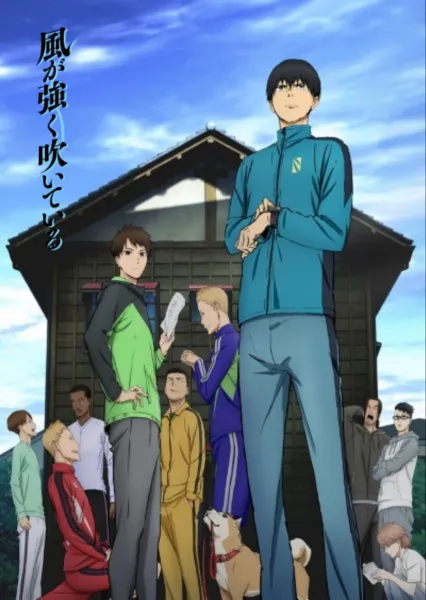
6 Anime Like Run with the Wind: Top Underdog Sports Stories
Anime Similar to Run With The Wind
Based on fan votes, the best starting pick if you want an anime like Run with the Wind is Haikyuu!!.
Do you ever wonder if you’re running toward a goal or just running away from yourself?
Fans love Run with the Wind because it treats sports as a soul-searching journey rather than just a scoreboard. You’re likely looking for character-driven dramas where the internal growth matters more than the gold medal. You can upvote your favorites below, but please only vote if you’ve finished both series.
A high-energy volleyball series where a short protagonist aims to conquer the court. It captures the same infectious team spirit and technical growth found in the Chikusei-so dorm.
Why it's similar: Both shows are produced by Production I.G and share a grounded, realistic animation style that emphasizes body mechanics. They excel at giving every member of the roster a distinct personality and a specific hurdle to overcome.
Power comparison: It focuses on real-world volleyball tactics and teamwork rather than supernatural abilities or exaggerated power-ups.
Why watch after Run With The Wind: Watch this if you want the same high-production value and a group of friends you'll genuinely care about.
A quiet, beautiful look at Japanese archery and the mental blocks that keep us from our potential. It mirrors the introspective, philosophical tone of running.
Why it's similar: The show focuses heavily on the 'sound' and 'feeling' of the sport, much like how Kakeru searches for the meaning of a perfect stride. It deals with sports trauma and the healing power of a supportive team.
Power comparison: The focus is on mental fortitude and the 'target panic' psychological condition rather than physical combat.
Why watch after Run With The Wind: If you enjoyed the meditative and artistic side of Run with the Wind, Tsurune is your next stop.
No, a second season is unlikely. The anime is a complete adaptation of the original novel by Shion Miura, covering the entire story from the formation of the team to the conclusion of the Hakone Ekiden.
Is the Run with the Wind anime faithful to the manga?
The anime is actually based on a novel, not a manga. It is widely considered a highly faithful and superior adaptation, though it makes small modernizations to the setting compared to the original 2006 text.
Is there any romance in Run with the Wind?
Romance is a very minor subplot. While there are hints of a crush involving Hanako, the story focuses almost entirely on the platonic bonds, brotherhood, and the internal development of the ten runners.
What is the watch order for Run with the Wind?
The watch order is simple: watch Episodes 1 through 23 in sequence. There are no OVAs, movies, or spin-offs required to understand the full narrative of the Chikusei-so team.
A stylistic masterpiece about two friends with very different attitudes toward table tennis. It’s less about winning and more about why we play.
Why it's similar: This series deconstructs the 'sports' genre to look at the psychological toll of talent and the reality of effort. Like Haiji’s influence on his peers, it examines how one person’s passion can transform those around them.
Power comparison: It uses surrealist animation to represent psychological states during a match rather than literal superpowers.
Why watch after Run With The Wind: Choose this if you want a deep, intellectual take on competition that ignores typical genre tropes.
A professional Shogi player struggles with loneliness and depression until he finds a family in a group of sisters. It captures the heavy emotional weight of competition.
Why it's similar: While Shogi isn't a physical sport, the internal monologues about pressure and belonging feel identical to Kakeru’s journey. It highlights the importance of 'home' and finding a reason to keep moving forward.
Power comparison: The conflict is entirely internal and social, focusing on the mental strategy of Shogi and personal recovery.
Why watch after Run With The Wind: Watch this if the emotional resonance and character growth were your favorite parts of the Hakone journey.
A bullied boy finds his strength and confidence through the brutal world of professional boxing. It’s the ultimate story of physical and mental transformation.
Why it's similar: It shares that 'start from zero' mentality where the protagonist must learn the absolute basics of his craft. The camaraderie in the boxing gym mirrors the bond of the residents in the Chikusei-so dorm.
Power comparison: Boxing is portrayed with extreme grit and technical accuracy, though some hits are visually stylized for impact.
Why watch after Run With The Wind: If you want to see the same level of blood, sweat, and tears put into training, this is the gold standard.
A popular high schooler finds a sudden passion for oil painting and aims for a prestigious art university. It captures the agonizing stress of a late-start pursuit.
Why it's similar: Like the novices in Run with the Wind, the protagonist is an amateur chasing a dream against experienced veterans. It perfectly depicts the 'all-in' obsession required to succeed in a competitive field as an adult.
Power comparison: The 'battles' are purely artistic, fought with brushes and color theory under strict exam conditions.
Why watch after Run With The Wind: Perfect for fans who loved watching the 'normal' guys in the dorm struggle to reach a professional level.