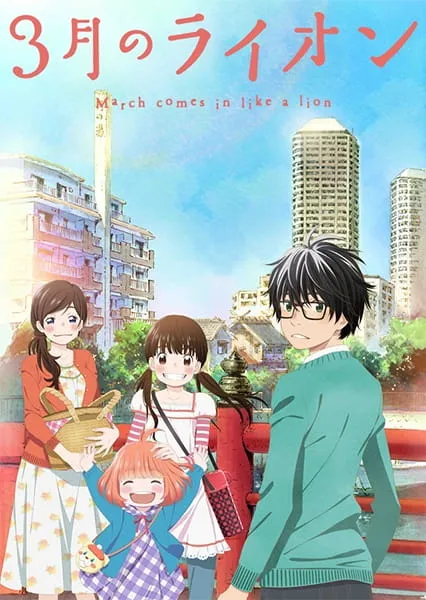
Anime Like March Comes In Like A Lion: Top 5 List (Healing)
Anime Similar to March Comes In Like A Lion
Looking for an anime like March Comes In Like A Lion? Based on fan votes, our best starting pick is Honey and Clover for its shared emotional DNA.
Ever felt like you're drowning in a room full of people?
Fans love Rei’s journey from isolation to warmth within the Kawamoto home. If you want more character-driven stories about overcoming depression and finding belonging, this guide delivers. Please upvote or downvote these matches only if you’ve seen both shows to help others find the right vibe.
A group of art students navigate the messy transition into adulthood while dealing with unrequited love. It captures the same bittersweet atmosphere as Rei's story.
Why it's similar: Written by the same creator, Chica Umino, it shares the exact same visual language and mastery of internal monologues. Both shows treat small moments of connection as life-changing victories.
Power comparison: Rather than Shogi, the competitive element here is the high-pressure world of art exhibitions and creative self-worth.
Why watch after March Comes In Like A Lion: Watch this if you want the same poetic dialogue and visual metaphors found in Sangatsu no Lion.
A piano prodigy loses his ability to hear his own music after a trauma, only to be pulled back into the world by a free-spirited violinist.
Why it's similar: Both series feature male leads who are technical geniuses but emotionally paralyzed by their pasts. They use their respective crafts—Shogi and Music—as a medium for processing grief.
Power comparison: Focuses on the physical toll of musical performance and performance anxiety instead of board game strategy.
Why watch after March Comes In Like A Lion: Pick this if you want a more melodic, high-drama take on the 'prodigy finds his heart' trope.
Currently, there is no official confirmation for Season 3. While Studio Shaft has been busy with other projects, the manga provides enough source material to cover at least two more seasons, ending at Volume 17 and beyond.
Is there romance in March Comes In Like A Lion?
The anime focuses on Rei’s mental health and growth, but subtle romantic threads exist. The manga goes much further into these relationships, particularly involving Rei and the Kawamoto sisters, but it remains a slow-burn character study.
Do I need to understand Shogi to enjoy the show?
No. The series uses Shogi as a backdrop for the characters' internal struggles. It employs visual metaphors, like stormy seas or heavy weights, to explain the game's emotional stakes so you never feel lost during matches.
Where does the anime end in the manga?
The second season ends at Chapter 89, which is the conclusion of Volume 9. If you want to continue Rei's journey immediately, start reading the manga from Volume 10 to see what happens after the Burnt Field arc.
Yatora Yaguchi is a popular student who feels empty until he discovers the agonizing, beautiful world of oil painting. He risks everything to get into a top art school.
Why it's similar: It mirrors the intense internal pressure Rei feels, focusing on the grueling work ethic required to maintain a professional standard in a competitive field.
Power comparison: It treats art as a high-stakes battleground where technical skill and emotional honesty are the primary weapons.
Why watch after March Comes In Like A Lion: This is for viewers who appreciated the technical breakdowns and psychological stress of Rei's professional matches.
An arrogant calligrapher is sent to a remote island to find his own style, only to be constantly interrupted by the local villagers.
Why it's similar: It mirrors the way the Kawamoto family forces Rei out of his shell. It focuses on how community and simple human interaction can heal a fractured ego.
Power comparison: There are no supernatural elements, only the grounded struggle of finding artistic inspiration in daily life.
Why watch after March Comes In Like A Lion: Watch this if you specifically loved the heartwarming, 'slice of life' scenes with Hina and Momo.
Chihaya Ayase dedicates her life to competitive Karuta, a Japanese card game that requires immense speed, memory, and heart.
Why it's similar: Like the Shogi matches in March, it elevates a traditional Japanese game into a thrilling emotional journey where every move reflects a character's growth.
Power comparison: The competition relies on auditory reflexes and mental endurance rather than the calculated strategy of Shogi.
Why watch after March Comes In Like A Lion: Perfect for fans who want a mix of Josei-style character depth and high-stakes competitive tension.