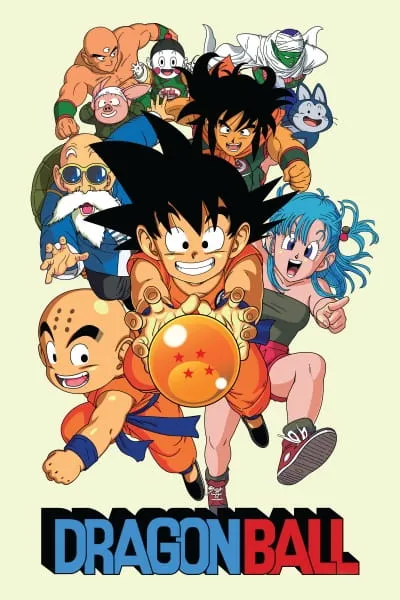
Anime Like Dragon Ball: Top 6 List (Martial Arts & Ki)
Anime Similar to Dragon Ball
Finding anime like Dragon Ball depends on your favorite era, but based on fan votes, your best starting pick is Hunter x Hunter (2011).
Miss the days when a new transformation meant the whole world was about to change?
Fans connect to Goku’s journey because it’s the ultimate underdog story fueled by pure grit and iconic power-ups. Usually, you’re looking for high-stakes tournaments or escalating power scales next. This list ranks the best matches; please upvote your favorites only if you've seen both series.
Core Themes in Dragon Ball
The Hero's Journey and Constant Self-Improvement
Tournament Arcs and Martial Arts Discipline
Escalating Stakes through Transformation-Based Combat
Power System Explained
Dragon Ball revolves around Ki, the inner energy present in all living beings. Combat focuses on physical martial arts enhanced by Ki blasts, flight, and legendary transformations like Super Saiyan. It established the standard for power levels where strength is often quantifiable, though strategy and technique still play roles in earlier arcs. Later series lean heavily into divine energy and cosmic power scales that can shatter planets.
A young boy sets out to find his father by becoming a licensed Hunter. It starts as a bright adventure but evolves into a deep, strategic battle masterpiece.
Why it's similar: This series captures the early Dragon Ball sense of wonder and the later Z-era tactical combat. The Heaven's Arena arc is essentially a love letter to the World Martial Arts Tournament.
Power comparison: While Dragon Ball uses raw Ki output, Hunter x Hunter uses Nen, which is much more complex and rewards strategy over brute strength. You'll see similar energy-based attacks but with stricter rules.
Why watch after Dragon Ball: Watch this if you want a power system with more logic and stakes that feel earned through intelligence.
An orphaned boy shunned by his village dreams of becoming the leader, the Hokage. It's a massive epic about growth, rivalry, and hidden potential.
Why it's similar: Naruto is the spiritual successor to Goku, sharing that same 'never give up' DNA and a hidden power that surfaces in times of crisis. The rivalry between Naruto and Sasuke mirrors the Goku and Vegeta dynamic perfectly.
Power comparison: Chakra is very similar to Ki, involving hand signs and elemental releases rather than just raw energy beams. Combat is a mix of hand-to-hand combat and tactical 'jutsu'.
Why watch after Dragon Ball: If you loved the emotional weight of Goku’s growth and the thrill of new transformations, this is the essential follow-up.
What is the correct watch order for the Dragon Ball series?
The core timeline is Dragon Ball, followed by Dragon Ball Z (or the filler-free Dragon Ball Z Kai), and then Dragon Ball Super. Dragon Ball GT is considered a separate side-story and is not canon to the main timeline established by creator Akira Toriyama.
Is Dragon Ball Super: Daima a sequel to Super?
Dragon Ball Daima is a new series set between the defeat of Kid Buu and the start of Dragon Ball Super. It is a canon project where Goku and his friends are turned small, focusing more on adventure and martial arts reminiscent of the original 1986 series.
Will Dragon Ball Super ever return with a new season?
While a second season of the Dragon Ball Super TV series hasn't been officially dated, the story continues in the manga. Arcs like the Moro Arc and Granolah the Survivor Arc provide plenty of material for a future anime adaptation.
Is there any romance in Dragon Ball?
Romance is a very minor element. Relationships like Goku and Chi-Chi or Vegeta and Bulma mostly happen off-screen or during time skips. The series focuses almost entirely on action, training, and the bond of friendship rather than romantic development.
A teenage delinquent dies saving a kid and is brought back as a Spirit Detective. He must fight demons to protect the human world.
Why it's similar: This is 90s shonen at its peak, featuring the Dark Tournament, which many fans consider the greatest tournament arc in anime history. The group dynamic feels like a tighter version of the Z-Fighters.
Power comparison: Characters use Spirit Energy for physical enhancement and signature moves like the Spirit Gun. It feels very close to early Dragon Ball Z in terms of impact and grit.
Why watch after Dragon Ball: Choose this if you miss the classic 90s aesthetic and want high-octane tournament battles with actual consequences.
Monkey D. Luffy assembles a pirate crew to find the legendary One Piece treasure. It is a massive, world-spanning adventure with incredible world-building.
Why it's similar: Luffy shares Goku’s bottomless appetite and simple-minded dedication to his friends. Both series excel at making the world feel larger with every new island or planet discovered.
Power comparison: Combat uses Devil Fruit abilities and Haki, which acts as a willpower-based energy. It’s less about energy blasts and more about creative physical transformations and punches.
Why watch after Dragon Ball: Watch this if you want a long-running epic that captures the 'grand journey' feel of the original Dragon Ball.
In a world where everyone has magic, Asta has none. He relies on pure physical strength and anti-magic swords to become the Wizard King.
Why it's similar: Asta is essentially a loud, magic-less version of Goku who trains harder than everyone else to compensate for his lack of natural talent. The squad-based battles provide constant hype and frequent power-ups.
Power comparison: Magic is the primary system here, but Asta’s anti-magic physical combat feels very reminiscent of Goku’s early reliance on pure martial arts and speed.
Why watch after Dragon Ball: This is for the fan who loves the constant 'shouting and powering up' energy that defines Dragon Ball’s most intense moments.
Baki Hanma trains with a single goal: to surpass his father, the strongest creature on Earth. It is a brutal, hyper-masculine look at martial arts.
Why it's similar: Baki strips away the energy blasts and focuses entirely on the obsession with being the strongest fighter. It captures the 'training to surpass the master' vibe of Dragon Ball's early martial arts roots.
Power comparison: There are no beams, only muscles and technique. However, the feats of strength are so exaggerated they feel supernatural, much like the original Dragon Ball’s physics-defying fights.
Why watch after Dragon Ball: Watch this if your favorite part of Dragon Ball was the focus on pure, unfiltered martial arts and gym-motivation energy.